Speakup Blog
Belonging at AAC Camp, Zeno Mountain Farm
The Zeno Mountain Farm program was developed as part of a USSAAC Amplifying AAC Voices mini grant submitted by Dr.Kimberly Ho.
When Professor Ho reached out about the AAC camp, I signed up right away. I didn't know what to expect. She shared that it was her first time organizing something like this.
When we arrived, there were red lanterns hanging on the wall. They weren't grand or elaborate, just quietly there and somehow, they made it feel like we were being welcomed home. That small detail stayed with me.
Walking into the room, I could feel the calm, a kind of quiet welcome that settled everything. There was no rush, no pressure. AAC devices were placed out in the open, not hidden or treated as special equipment. They are just part of the environment. Volunteers sat beside my daughter, not above her, helping her program words she might want for the week. No one tried to hurry her. That alone felt different.
It didn't take long before she stepped into herself. She began working with student volunteers to plan yoga sessions for the camp. Through her AAC device, she shared ideas, made choices, and led in ways I don't often get to see in everyday spaces. What struck me most was not just that she was communicating and that people listened. They waited. They followed her lead.
And I found myself watching from the side, realizing I didn't need to step in. For a moment, I wasn't her interpreter or her advocate. I was just her mom, watching her be fully herself. That moment stayed with me. The moment that I felt such a huge pride in her eyes.
Throughout the week, she tried things she had never done before, skiing, sledding, making snow angels, tasting foods she would not normally touch. She did not request for rice, which is her comfort food at home. Each experience wasn't just an activity; it was an invitation. And she accepted, again and again, surrounded by peers and volunteers who celebrated every attempt.
The AAC users connected in ways that don't often get recognized. They joked, played, and danced together. My daughter found friendship. She asked me to reach out for a meet up post AAC camp. For her to ask for a meet-up afterward—that meant the world. It wasn't just friendship formed at camp; it was connection that carried beyond
It reminded me, in a very real way, that communication is not about speed or speech—it's about being met with patience and respect.
For me, the experience with other parents was just as powerful. We sat together without needing to explain the basics, no long backstories, no clarifications. We shared pieces of our lives in a way that felt immediate and understood. There were moments of laughter, and moments where someone would pause mid-sentence, and everyone else already knew why.
At one point, I realized something quietly: I had been holding a kind of loneliness I didn't fully recognize until it started to lift. I burst into tears. Being in that space didn't erase the challenges, but it gave them context, and it gave me community.
Zeno didn't feel like a program. It felt like a place where things were finally aligned the way they should be. Not where my daughter had to adapt to the world, but where the world adjusted, just enough, to include her.
And in that shift, something opened.
I began to see her differently, not through the lens of what she struggles with, but through what she naturally brings: leadership, humor, and determination.
On the last day, she didn't want to leave. And honestly, neither did I.
We came to rest. But we left with something more lasting: connection, perspective, and a renewed sense of what is possible.
What Professor Ho and her team created is not just a camp. It is a model of what inclusion can look like when it is practiced intentionally. It shows what happens when communication is honored in all its forms, and when individuals are given the time and space to be known.
I felt that belonging is not something you have to fight for in the right environment. It is something that is simply there, waiting.
And once you feel it, you carry it with you—especially on the days when you need it most.
Thank you AAC camp. You reminded us that inclusion done with love doesn't just change a week. It changes how we see what's possible.
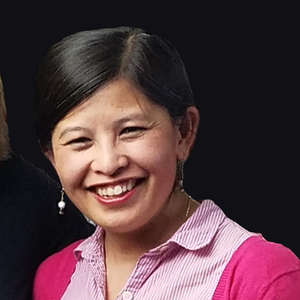
Oanh Bui is a Vietnamese immigrant, bilingual cultural broker, and advocate for communication rights for autistic adults and people with disabilities. Her advocacy is shaped by her experience as the mother of a young adult daughter with autism and a genetic disorder who uses Augmentative and Alternative Communication (AAC). After facing language barriers and cultural stigma, Oanh founded Circle of Vietnamese Parents, a nonprofit that supports Vietnamese-speaking families through bilingual training, parent support, and community events. She has also worked with Penn State and Vanderbilt to study AAC access barriers and develop culturally responsive training for future speech-language pathologists.
Thank you for reading this blog post. The views expressed in this post are that of the author, and do not necessarily reflect the views and policies of USSAAC members and board members. No endorsement by USSAAC is implied regarding any device, manufacturer, resource or strategy mentioned. We would love to hear from you. Please share your thoughts with a comment below or send a message through our contact page.