Speakup Blog
Emergency Preparedness Part 2: "Stuff Can Be Replaced. There's Only One You."
Part 2: "Stuff Can Be Replaced. There's Only One You."
Emergency preparedness isn't just for the natural disasters that make the news. Tony and I practiced emergency scenarios every week to prepare ourselves. Still, when we faced an actual disaster it was more devastating than anything we planned for.
Fire!!
On May 4, 2026 our emergency preparedness protocols, kits and communication were put to the test when a massive fire broke out in the basement of our apartment complex. Tony and I weren't worried because it was nearly five o'clock and thought someone burned their dinner, a common occurrence. Then Tony saw emergency vehicles rushing to our building even though it was less than 50 yards from the fire department. We knew we were in danger.
Tony began gathering some of our medications and my tablet in case we needed to be evacuated. A minute later a firefighter pounded on everyone's doors, telling our neighbors they needed to leave immediately because there was a fire in the building. When Tony answered the door, we were told to shelter and place. "Stay in the living room. We don't know how to get you out." We lived on the third floor and had to wait for an available chair to be evacuated safely, as there were many occupants in our complex who were elderly or disabled.
Our go bag was by the door. My purse with my identification, emergency meds, money, inhaler and diabetic snacks was right behind me but I couldn't reach it quickly. My continuous glucose monitor, iPad, phone, low flow water bottle and paper communication displays were right beside me. But there wasn't enough time or people to carry everything. When I tried to grab my belongings someone said "Stuff can be replaced. There's only one you."
We were instructed not to carry anything. If it was dropped someone might fall. It was a huge reality check. I focused on my go bag too much and not my communication or safety.
Heat radiated in the walls and the floor as firefighters pushed through the hallway. I could feel the building groaning and knew part of it would collapse. We barely got out in time before the fire reached our floor. One firefighter helped Tony outside with his walker, his wallet, a few of our medications and my iPad with Grid for iPad software. Three or four firefighters finally brought me down the stairs with a special fire wheelchair. I've never been so afraid for my safety. We were trapped in a burning building. One of my worst nightmares suddenly became my reality. I am so grateful firefighters went back to get my wheelchair as parts of the building collapsed. I can't believe they risked their lives for us and my chair. It was close.
Getting to know the firefighters and listing our needs in North Dakota's Special Needs Registry helped. Many of our neighbors knew us. They made sure we got out alive by saying, "There's a disabled couple in apartment 308 on the third floor. Pam and Tony can't get out themselves. He uses a walker and she's in a wheelchair and has a communication disability, please help them."
Evacuated!
We were sheltered in a nearby garage and waited with paramedics until family and home health staff found us. I communicated with my iPad as long as possible, yes/no questions, and facial expressions. We were evacuated to the fire station.
Those of us who didn't have anywhere to go were taken to a medical homeless shelter in a Baptist church. We were packed tightly on paratransit buses. Nobody would have had room for go bags.
It was surreal. I had been living in isolation because I have the immune system of a chemo patient, severe allergies and respiratory issues. How would I survive this? The emergency wasn't over. We had nothing but what we could carry. Nurses, one of my nurse case managers and Red Cross workers did preliminary assessments immediately. They knew of Tony and me on sight. I told them I needed insulin, diabetic testing supplies, medication, a Hoyer lift and iPad charger. I had to stay in my chair. All I really wanted was a soft blanket, a hot cup of tea, my medical alert cat Cheech, and a quiet dark place to decompress.
We heard our apartment collapsed. I was so grateful to be alive. At the same time so much of my independence was gone. It felt like the fire burned my larynx.
Questions and Fear
I didn't have time to be emotional. Yet, I was on sensory overload, thinking a million things at once I couldn't express. My mind was in work mode, assessing our needs, triaging our next steps and helping others.
Was Tony okay?
Was everyone alive?
How many were hurt?
Would I survive this with my poor immune system, communication issues, recent bouts of sepsis, respiratory issues and life threatening allergies?
How would I manage my disability and life without Cheech my medical alert cat, my eye gaze device, my mounts, my tray, insulin, diabetic testing supplies, my adaptive mug, my special diet and silverware?
My senses were overwhelmed.
The fluorescent lights were too harsh. I smelled like smoke and just wanted to be comfortable. Getting my insulin, soft roomy fun pajamas, something to eat, a blanket and a tea helped a lot. We talked with our neighbors about the fire, tried to plan our next steps, and checked for updates. A friend texted me and kept me company through the night because I couldn't lie down.
Communicating Needs
After a few hours' sleep, I began to update my communication passport. It had all the information needed for assessments: Tony's and my urgent needs, our vital information, allergies, methods of communication, medication, explanations of our fluctuating baselines, emergency contacts, diagnoses, doctors, case managers, speech therapist, diet, needed medical equipment. I noted what we had, what we lost, what was damaged and how I was doing.
My sister brought me a backup paper communication display that I helped design. That wouldn't meet our needs throughout the disaster and the recovery. Family and those who knew me could read my face easily. I was glad I had my iPad and could rely on silent Native American communication techniques I learned as a child so I could use biological speech minimally to avoid pain, coughing fits, secretion issues, choking, aspiration and exhaustion.
Communication is the most difficult, painful and exhausting than ever. I've never experienced anything like it and hope I never do again. The loss of autonomy and voice was hard. I was used to speaking for myself without an interpreter 24/7. Suddenly I couldn't. I had to fight to be seen and heard productively any way possible without melting down. I typed with Grid for iPad chat history, saved messages in my communication passport and word prediction.
On days I was too exhausted to use direct select on my iPad, I answered yes/no and multiple choice questions, used manual eye gaze techniques, strangled speech or Grid for iPad with direct select. I programmed as many interfaces as possible. Preparing for the next emergency took most of my time and energy.
Reality Hits Harder Than Ever Imagined
Many hospitals, businesses, organizations and individuals donated their time and resources to help us. By the second night we had a Hoyer lift and Red Cross hospital beds. The next day we were moved to the Comfort Inn in Mandan, Bismarck's sister city in one of the neighborhoods where I grew up. Then we went to the Baymont Hotel down the street and back to the Comfort Inn.
Tony suffered severe vertigo nine days after the fire and needed to be hospitalized for three days. I had to manage everything alone and handle both of our communication needs during meetings. Friends, family and staff checked in with both of us. I used my voice, yes/no questions, texts and my iPad. It was exhausted, experiencing overload and running on adrenaline.
When the stress, sensory issues, grief and exhaustion became too much, I went for walks alone to think, sort out my emotions and figure out what I needed in that moment. The phrase "I'm going for a walk" became a vital phrase and still is. Tony and I feared being institutionalized and getting lost in the system.
Finding Ways to be Heard, Visible and Get Needs Met
This was the biggest fire in Bismarck, North Dakota's history. Our community came together to support us. A severe housing shortage prolonged the emergency. Tony and I were displaced four times in 34 days. We were homeless from May 4 to June 22 until we moved into senior living community apartments in Mandan not far from where I grew up. Moving to a different county increased the red tape. All of my neighbors faced similar situations. Some are still homeless and living in hotels months later, because they can't find safe affordable accessible housing.
The existing housing shortage is so dire KFYR-TV, a local news network contacted Tony and me to do a story on our experiences and the ongoing emergencies disabled people have during disasters. I am so grateful Thea Jorgensen, KFYR-TV, media outlets and our community value us and made our experiences visible. That is what we needed most.
Our Huge Network of Supporters
We are grateful to family, friends, firefighters, home health professionals, police officers, hospitals, Housing and Urban Development (HUD,) my speech therapist Ronni Kupris, ND Assistive, Smartbox, case managers, Century Baptist Church, Central Synagogue, Comfort Inn in Mandan, Baymont Hotel, Connecting with North Dakota Aging/Developmental Disability Services. Dakota Center for independent Living (DCIL) prevented us from being institutionalized and assisted with lots of hurdles. The North Dakota Lions assisted with funding for hotels. Government agencies and property managers helped us with paperwork and hurdles. Local restaurants, stores, Red Cross and Salvation Army kept us fed. Red Cross volunteers brought therapy animals to help with the trauma. Thrift stores, neighbors and strangers helped us with what we needed. Networking with pastors, chaplains, rabbis, clergy and communities of faith kept us grounded, meeting spiritual and invisible needs. They know the heartbeat, needs and resources others don't. So many people reached out to provide support.
The whole crew helped meet our communication and technology needs. Ronni, ND Assistive and Smartbox worked together to loan me a Zuvo and mount until insurance approves a GridPad 16, mount and custom tray for me. I'm having difficulty getting wheelchair repairs.
Unimaginable Losses
I knew Cheech my medical alert cat, my tray, my EyeTech Elite with Grid 3 apps and custom displays, my artwork, pictures, family heirlooms, 34 years of AAC and service animal research and our home of 16 years were lost. Losing Cheech and my speech device has been the hardest.
I feel like I lost more body parts and my voice. I feel like a different person because my life has changed drastically.
Emergency preparedness, disaster relief and recovery are hard. I've performed disability risk assessments for 34 years, survived multiple disasters and lost everything. I've learned something new each time. Every person, situation and outcome is unique. These things remain: communicate, create a passport that tells people about you and what you need because exhaustion is inevitable, stay visible, have people help pack bags, store small kits elsewhere, network, practice scenarios, expect everything to go wrong, and prepare, prepare, prepare.
Resources
Access USSAAC's compendium of disaster preparedness and response resources at
*PUBLIC* DISASTER PREPAREDNESS AND RESPONSE RESOURCES - Google Drive
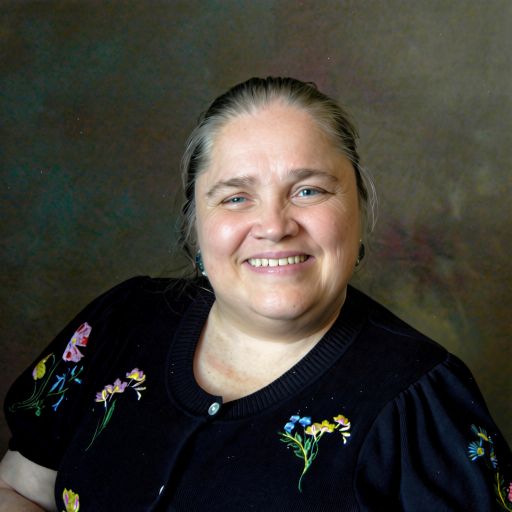
Pam Kennedy https://www.ussaac.org/speaker/pam-kennedy/ is a disability advocate, disaster refugee, an augmentative and alternative communication user, emergency management and crisis Intervention specialist who has performed disability risk assessments to agencies since 1992. Learn about Pam's experience in Hurricane Katrina at Disaster Preparedness for People with Complex Communication Needs: A Personal Perspective
Thank you for reading this blog post. The views expressed in this post are that of the author, and do not necessarily reflect the views and policies of USSAAC members and board members. No endorsement by USSAAC is implied regarding any device, manufacturer, resource or strategy mentioned. We would love to hear from you. Please share your thoughts with a comment below or send a message through our contact page.